Why Adaptability Is Replacing Efficiency.

All in Management Science
The companies that thrive in today's business environment are not necessarily those with the greatest resources, but those that learn and adapt the fastest.
The future organization will not be defined by functions. It will be defined by the flow of data, decisions, and accountability across them.
For decades, GBS leaders optimized processes around people. The next evolution requires something far more fundamental: redesigning the operating model around intelligence itself.
What you measure matters less than how it connects.
In a business environment defined by speed, ambiguity, and constant change, organizations need operating models that translate strategy into everyday action.
"Cracking the Code of Transformation Programme" will be a practical, insightful, and inspiring resource for professionals dedicated to making transformation a reality.
Continuous change is not a strategy—it is a mindset. It is a way of being that aligns with the rhythms of nature and the realities of business. It requires courage, curiosity, and compassion. It requires seeing beyond the present, connecting across boundaries, and evolving not for survival alone, but for the common good.
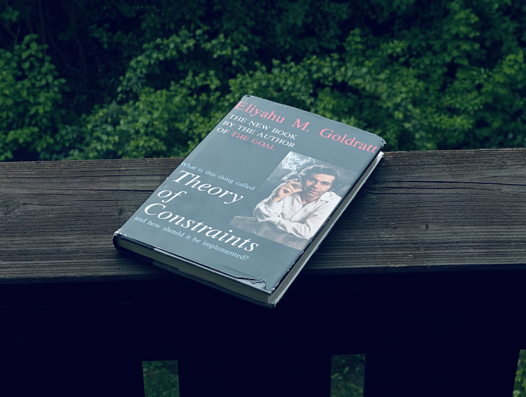
The Theory of Constraints provides a compelling framework for consulting firms seeking to improve delivery, scale operations, or simply gain clarity on what’s holding them back.
One effective strategy that has gained significant traction is the establishment of Centers of Expertise (CoE). These centralized hubs of specialized knowledge and skills create substantial strategic value, driving efficiency, innovation, and the digital transformation of business processes.